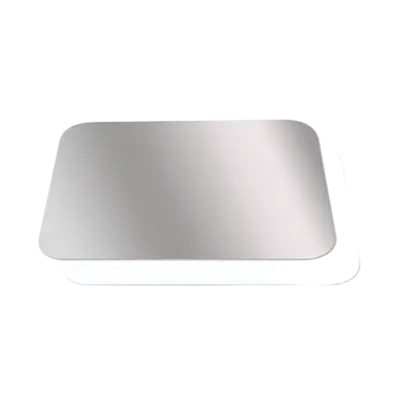
COP R63L rectangular cardboard and aluminium cover – specifications:
- shape: rectangular
- external dimensions: 204×141mm
- number of pieces in a package: 100 pieces
- quantity per carton: 1000 pieces
- lid type: cardboard and aluminium
- application temperature: -20°C to ambient temperature
- baking: no
- Freezing: yes
- microwave: no
- sealing: yes
Main advantages of cardboard and aluminium lids:
-
Maintaining food temperature and freshness - The lid helps to keep the heat inside the container.
-
Protection against contamination, moisture and external influences - The cardboard-aluminium lid acts as a barrier against dust, dirt, insects and dust.
-
Storage options — including freezing and chilling
Many cardboard-aluminium lids, including the COP series, are suitable for use at low temperatures, allowing food to be frozen or stored cold. This means that when freezing or chilling food, there is no need to transfer the dishes to other containers, saving time and reducing the risk of contamination.
-
Aesthetics and presentation — the finished dish looks professional - The closed mould with a lid looks neat and professional — ideal for catering, food service and ready-made meal sales.
-
Hygiene and operational convenience — the use of disposable lids eliminates the need for washing, which significantly saves time and labour in mass production, catering or takeaway sales. The lids come out individually, which facilitates logistics and organisation.
Although cardboard and aluminium lids have many advantages, there are a few conditions to keep in mind:
-
They are not always suitable for baking – lids are often used for sealing and transport, but the lid itself may not withstand the high temperatures in an oven.
-
When stored for long periods in freezing or humid conditions, the cardboard part may be less durable than hard plastic lids — it is worth checking the manufacturer's specifications.
-
Since the lid is disposable, it generates more waste than reusable lids.



 Log in with Facebook
 Log in with Google


