


Disposable cutlery – the plastics directive
Disposable cutlery is a product covered by the plastics directive known as the Extended Producer Responsibility Directive. This European Union regulation requires the withdrawal from the market of disposable cutlery made of plastic in favour of materials that are easily recyclable.
Disposable wooden cutlery sets – what does the production process look like?
The production process for disposable wooden cutlery begins with the sourcing of raw materials in the form of wood, most often birch and bamboo. The type of material used determines the quality of the cutlery, its appearance, hardness and thickness.
Birch, which dominates the market, is, on the one hand, a material that complies with the plastic directive and, on the other hand, a material that is easy to process and durable in use.
Once the wood has been delivered to the production plant, the first step is to prepare the raw material for processing. The bark is removed using a specialised machine, leaving a raw bale of wood.
Then, surrounded by steam, the bale of wood is cut into strips of the appropriate thickness - corresponding to the thickness of cutlery.
In the next stage, the strips of wood (which have gained the appropriate flexibility thanks to the steam) are processed on a cutting machine to obtain the desired shape.
The penultimate stage of production is the polishing of the cutlery to eliminate sharp edges.
The final stage is packaging the cutlery into sets with the appropriate configuration (for example: wooden spoon + napkin or wooden knife with fork + napkin).
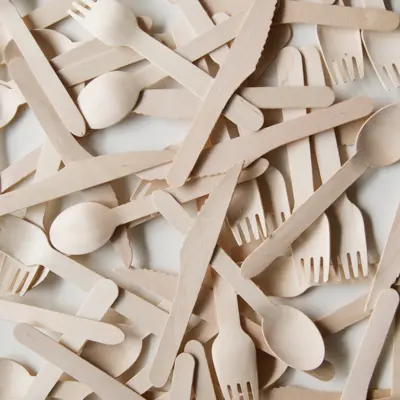
Disposable wooden cutlery - certificates
The production of disposable wooden cutlery sets must meet the requirements of three basic certificates. These are:
- BRC - an international standard developed in 1998 in the United Kingdom, which concerns recommendations and guidelines for companies operating in the food industry in terms of food safety. The BRC certificate is proof that the product has undergone specialist testing and inspection, is safe for consumers and is of high quality.
- SGS-SVHC and SGS-HEAVY METAL - these are very restrictive tests to check for the presence of hazardous substances such as metal filings or other substances that may have a negative impact on the human body.
- FSC is a certificate awarded to manufacturers of wood products confirming that the raw material comes from recycled sources or controlled forests.

Disposable spoons - types
In the eco-friendly cutlery industry for the catering sector, we can distinguish between two types of spoons. These are wooden spoons and sugar cane spoons. The latter, thanks to the malleability of sugar cane, allow manufacturers to achieve greater depth. This product is ideal as a spoon for ramen, udon, broth and creams. In other words, it is perfect for eating soups with lots of noodles and other ingredients.
Check out the products in practice:
Set: knife + fork + brown napkin - Click here!
Set: spoon + brown napkin - Click here!
More information?
Did you not find enough information in the article?
Feel free to contact our representatives:
Tomasz - tomasz@pakowanko.com / +48 795 537 846
Monika - zamowienia@pakowanko.com / +48 698 487 022
 Log in with Facebook
 Log in with Google

